IRS Requires Disclosure of Foreign Financial Assets
 In 2010, President Obama signed into law the Hiring Incentives to Restore Employment Act (HIRE). One of the provisions of the HIRE Act relates to additional reporting and disclosures for US taxpayers with interest in certain foreign assets in excess of $50,000.
The federal government and US Treasury have a strong desire to close the "tax gap." The tax gap is the difference between what taxpayers should have paid and what is actually paid. Much of the tax gap is willful tax evasion by taxpayers. The remainder is primarily caused by incorrect tax filings due to the complexity of the tax code. Some estimate that the tax gap exceeds $300 billion per year. Obviously, closing this gap is a good solution for Washington (and probably for all honest US taxpayers).
What Is The Future Of QR Codes and How They Will Be Used?

Have you ever seen a weird-looking graphic that somewhat looks like a stamp but has no distinct image on soda bottles, fast-food wrappers, magazines and even giant billboards like that of Ralph Lauren and Calvin Klein? It may also be mistaken as a bar code at first look but with closer inspection you'd actually see it to be pixelated without a define figure or image within. This odd digital stamp is referred to as a QR code.
QR codes originated from Japan and are widely used there. Currently Europe and America is catching up on this latest technology. QR codes have a lot of promising potentials as they are highly engaging. These are often found printed on tags, labels, magazines, mugs, packages, t-shirts and other printable material for marketing and advertising. You can even scan a QR code straight from the monitor! These codes are scanned using a smart phone via a downloadable QR scanner or reader. The moment the code is scanned the customer is instantly taken to the website linked to the code. It is a new take on direct advertising that is taking the world by storm.
What Income Must Be Included in the Means Test When Filing Bankruptcy?
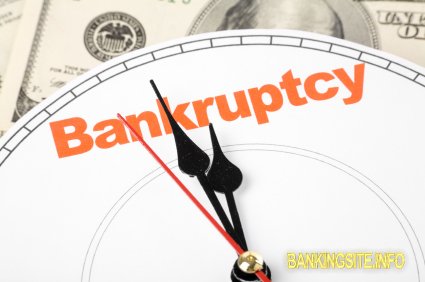 In 2005 Congress reformed the Bankruptcy Code and created what is called the Means Test. One of the key components of the Means Test is the calculation of current monthly income to determination if someone has monthly disposable income. Disposable income is theoretically the amount of money someone can afford to pay back their debts each month. If there is disposable income, then that income should be paid to creditors in a Chapter 13 bankruptcy case and a Chapter 7 bankruptcy should not be filed. So what is income when filling out the Means Test?
Generally all income earned or received during the six-month period prior to a bankruptcy case being filed must be included in the Means Test, or "All figures must reflect average monthly income received from all sources, derived during the six calendar months prior to filing the bankruptcy case, ending on the last day of the month before the filing. If the amount of monthly earnings varied during the six months, you must divide the six-month total by six, and enter the result on the appropriate line." The earnings listed is therefore a six-month average. The result of the six-month average can vary widely depending upon whether income is received from self-employment, or someone is employed and receives a salary that stays the same each month.
Readmore...
Tags: appropriate, earnings, money, reflect, must, Congress, determination, month, Code, bankruptcy, received